Compliance · Drop-Shipper Liability (VerpackG)
Who is liable for packaging in a drop-shipping model under VerpackG?
A guide to extended producer responsibility for merchants using third-party logistics
Drop-shipper liability under the German Packaging Act refers to the legal principle that online merchants cannot outsource their environmental compliance duties. Even if a third-party wholesaler or warehouse packs and ships the goods, the merchant selling to the consumer often holds the regulatory burden.
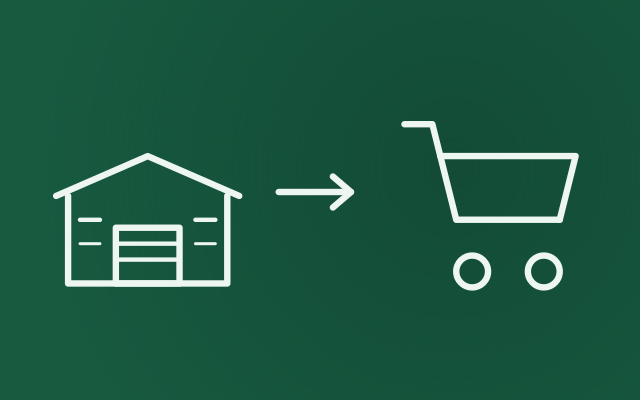
The modern e-commerce supply chain relies heavily on decentralised logistics. Many online sellers never physically touch the inventory they sell, operating digital storefronts that automatically route customer orders to independent factories, wholesalers, or third-party fulfilment centres. While this business model allows merchants to grow rapidly with minimal overhead, it creates significant confusion regarding who exactly is responsible for the cardboard boxes, plastic mailers, and void fill used to deliver the items.
Environmental laws are designed to target the economic operator who initiates the flow of waste into a domestic market. In Germany, lawmakers have firmly closed the loophole that previously allowed distance sellers to blame their logistics partners for unrecorded packaging. If you are the public-facing merchant who sells the product and triggers the delivery to a household, you must carefully determine your status. Failing to understand how the law views drop-shipping arrangements exposes your business to blocked shipments, suspended marketplace accounts, and heavy administrative penalties.
What drop-shipper liability actually means
In the context of the German extended producer responsibility framework, liability rests on the entity defined as the producer under the law. The central authority, the Zentrale Stelle Verpackungsregister (ZSVR), operates the LUCID Packaging Register and provides specific legal interpretations for different distribution channels, explicitly including mail order companies, online retailers, fulfilment services, and drop shipping.
When a merchant operates a pure drop-shipping model, they take a customer's order and instruct a third-party supplier to ship the goods directly to the end consumer. Under the German packaging rules, the producer of the shipping packaging is generally the entity that is responsible for the goods being packed and shipped. Because the drop-shipper initiates the commercial transaction and instructs the third party to dispatch the parcel, the drop-shipper is often legally classified as the producer, meaning they must hold the registration and pay the recycling tariffs.
"If you are distributing packaged goods in Germany, you have to be registered with the LUCID Packaging Register."
This liability framework prevents the creation of a shadow economy where neither the retailer nor the wholesale supplier takes responsibility for the waste. It forces the contracting parties to be entirely transparent about who holds the LUCID registration number for the shipping cartons and the primary product packaging.
Does this apply to me?
If you run an online store, sell via digital marketplaces, or advertise products to German consumers but rely on a third party to hold and dispatch your inventory, you must assess your liability. You cannot simply assume your supplier is paying the environmental fees. If the third-party supplier is based outside of Germany and does not hold a valid LUCID registration, the legal obligation to register the packaging automatically falls on you as the domestic importer or the merchant instructing the delivery.
The rules also encompass merchants using modern fulfilment service providers. Lawmakers and authorities actively conscript these logistics companies to act as enforcement gatekeepers. Fulfilment service providers are legally prohibited from picking, packing, or shipping goods for a merchant who cannot prove they are compliant.
If a fulfilment centre or an online platform discovers that a merchant has provided inaccurate or incomplete compliance data, they will demand immediate correction. If the merchant fails to provide the necessary proof of registration, the fulfilment service provider must swiftly suspend the provision of its service in relation to offering packaging to consumers located in the Union.
Registration and enforcement mechanisms
Understanding the compliance architecture is essential for merchants relying on third-party logistics to serve the German market.
| Regulatory element or concept | Detail |
|---|---|
| Central authority | The Zentrale Stelle Verpackungsregister (ZSVR) governs the rules for drop shipping and fulfilment. |
| National database | Obligated producers must register via the LUCID Packaging Register. |
| Fulfilment suspension | Fulfilment service providers must swiftly suspend services to non-compliant producers. |
| Gatekeeper liability | Producers must provide compliance information to their fulfilment service provider at the conclusion of their contract. |
| Producer status | Determines whether the drop-shipper or the supplier holds the legal obligation to register. |
Common misconceptions about drop-shipper liability
My supplier pays for the packaging, so I am exempt. Simply buying products from a supplier does not transfer your environmental liability. Unless your supplier is explicitly registered in the LUCID database for the exact shipping materials and product packaging being sent to the German consumer, you as the drop-shipper are legally required to assume the producer status, report the material weights, and pay the tariffs.
Fulfilment centres automatically handle environmental compliance. A third-party warehouse picks and packs your goods, but they do not assume your legal identity. While they supply the physical cardboard box, they act on your instructions. The law clearly separates the physical packer from the legal producer. Your fulfilment centre will actually demand your registration number before they agree to ship your orders.
Drop-shippers do not need to register if they never touch the goods. Environmental laws regulate commercial transactions and the introduction of waste into a market, not just the physical handling of boxes. Because you operate the storefront and conclude the contract with the end consumer, you are initiating the creation of household waste. Therefore, you are fully subject to market surveillance and enforcement actions.
International drop-shippers cannot be fined by German authorities. While you may reside outside the country, you rely on domestic infrastructure to deliver your goods. Regulators enforce the law by compelling digital marketplaces and local customs channels to block unregistered merchants. You will quickly find your sales channels suspended and your parcels returned or destroyed if you ignore the domestic packaging laws.
5 examples of drop-shipping and fulfilment compliance
1. A classic drop-shipping arrangement An online merchant in Berlin sells wooden toys via their website. When an order is placed, a wholesaler in Poland packs and posts the toy directly to the German buyer. Because the Polish wholesaler is not registered in Germany, the Berlin merchant assumes full legal liability as the producer of both the toy's wrapping and the shipping carton.
2. Using a major fulfilment network A sports apparel brand uses a massive international fulfilment service provider to store and ship its goods. Before the logistics company agrees to dispatch a single shirt to Munich, they compel the apparel brand to provide their official LUCID registration number to avoid gatekeeper penalties.
3. Facing service suspension An independent seller provides a fake registration number to their warehouse partner. The fulfilment service provider checks the public database, identifies the discrepancy, and swiftly suspends their picking and packing services until the seller secures a legitimate environmental registration.
4. Clarifying supplier agreements A drop-shipper partners with a large German distributor. They draft a formal commercial agreement explicitly stating that the distributor holds the LUCID registration for all transport packaging and consumer packaging, thereby legally shielding the drop-shipper from duplicate reporting.
5. Registering imported consumer goods A merchant runs a drop-shipping store sourcing cheap electronics directly from factories in Asia. Because the factories do not participate in European environmental schemes, the merchant calculates the weight of the plastic mailers and cardboard sleeves for all their German sales, registering and paying the fees themselves.
Terms related to Drop-Shipper Liability (VerpackG)
| Term | What it means |
|---|---|
| statutory-enforcement-verpackg | The legal mechanisms and database checks used by regulators to ensure packaging compliance. |
| free-rider-epr | A business that sells packaged goods into a market without paying the required environmental recovery fees. |
| administrative-fines-verpackg | The financial penalties issued by the central authority to merchants who fail to register their packaging. |
| packaging-weight-threshold-epr | The specific volume limits that may trigger additional reporting duties, such as independent audits, for high-volume sellers. |
Frequently asked questions
What is a producer under the German Packaging Act?
A producer is the first economic operator to commercially place packaging filled with goods onto the German market. Depending on the exact nature of the supply chain, the commercial contract, and the location of the supplier, this definition frequently captures drop-shippers, online retailers, and direct-to-consumer brands.
Do I need to register if I use a fulfilment centre?
Yes. Using a fulfilment centre does not relieve you of your extended producer responsibility. In fact, modern environmental regulations force fulfilment service providers to verify your compliance. If you do not hold a valid registration in the national database, the warehouse is legally required to block your shipments.
Who pays for the shipping box in a drop-shipping model?
The responsibility for the shipping box usually falls on the party instructing the shipment. If you run the storefront and instruct an unregistered third party to pack and send the item to your customer, you must declare the weight of that shipping box to a commercial compliance scheme and pay the corresponding recycling fee.
Can my supplier register the packaging instead of me?
If your supplier is located within Germany or holds a valid German registration, you can negotiate an agreement where they assume the legal responsibility for the packaging they supply. However, if they are an overseas factory with no European compliance footprint, the liability to register the imported materials transfers entirely to you.
What happens if I ignore drop-shipping packaging laws?
Operating outside the environmental framework carries severe commercial consequences. Beyond heavy administrative fines levied by the government, your logistics partners and marketplace platforms will suspend your accounts. Fulfilment networks act as strict gatekeepers and will freeze your inventory to avoid incurring their own legal penalties for assisting a non-compliant merchant.
Sources:
Written by Daniel Vaknine, Co-founder – Compliance & Operations · Last reviewed 27 Jul 2026
Not sure what applies to you?
Answer a few questions about where you sell and see which packaging rules you fall under.
Check your obligations