Compliance · Packaging Waste Recycling Note (PRN)
What is a Packaging Waste Recycling Note (PRN)?
A guide to the UK system of packaging recycling evidence and compliance
A Packaging Waste Recycling Note (PRN) is a certified documentary proof demonstrating that a specific tonnage of packaging waste has been officially recovered and recycled. Businesses purchase these certificates to prove they have met their legal environmental recycling obligations.
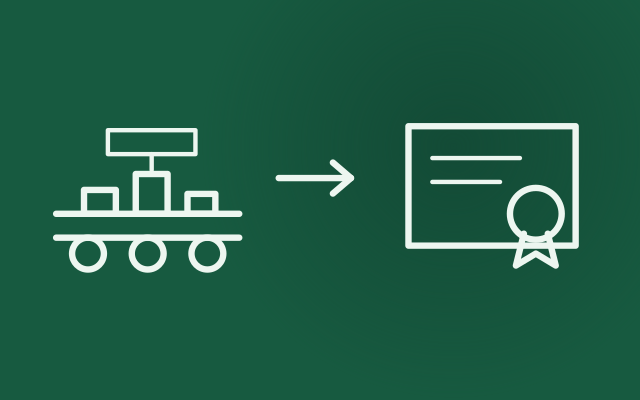
For many years, the United Kingdom has used a market-based certificate system to fund its recycling infrastructure. Instead of simply taxing businesses a flat rate for every box or bottle they place on the market, the government mandates that companies hit specific recycling targets based on their market share. Because a merchant selling electronics or cosmetics cannot practically track down their own cardboard boxes and melt them back into paper pulp, they must pay someone else to do the recycling on their behalf.
This is where the certificate market comes into play. When an industrial recycling facility successfully processes a tonne of material, it generates a tradable note. Businesses obligated under the environmental regulations must buy these notes to offset their own packaging footprint. The price of these certificates fluctuates based on the national supply of recycled materials and the corporate demand for compliance, turning environmental responsibility into a direct, variable commercial cost for anyone trading in the British market.
What a Packaging Waste Recycling Note (PRN) actually means
A PRN, or its international equivalent the Packaging Waste Export Recycling Note (PERN), acts as the primary mechanism for demonstrating legal compliance in the United Kingdom. It is formal evidence that packaging waste has been recycled (Packaging waste: prepare for extended producer responsibility - Daera). Regulators will not simply take a merchant's word that their packaging is sustainable; they require strict, audited proof that an equivalent volume of material was pulled out of the waste stream and physically reprocessed into secondary raw materials.
"A PRN (packaging waste recycling note) or PERN (packaging waste export recycling note) is evidence that packaging waste has been recycled."
The physical act of recycling is carried out by specialised waste management companies. You can only get PRNs from accredited re-processors, who are the entities officially responsible for recycling the packaging waste. If the waste is shipped overseas for treatment, you can get PERNs from accredited exporters instead. By buying these certificates from these specific accredited operators, merchants directly finance the recycling sector and work towards meeting their mandatory recycling obligations.
Does this apply to me?
If you are a business operating in the United Kingdom that handles, manufactures, or imports packaged goods, you must evaluate your liability for buying these certificates. The system operates alongside the newer extended producer responsibility data reporting laws. By obtaining these notes, obligated businesses ensure that they are meeting their specific material recycling obligations.
Under the regulatory transition, recycling obligations will apply from 2026 onwards, and these future obligations will be calculated based directly on your 2025 data. This means merchants must meticulously track the cardboard, plastic, glass, and metal they supply right now, because those current volumes will dictate exactly how many certificates they are forced to buy on the open market next year.
However, the system is designed to protect micro-enterprises and low-volume sellers from the volatile certificate market. If your business is legally classified as a small producer under the extended producer responsibility regulations, you do not have to pay waste disposal fees, nor are you required to buy packaging waste recycling notes (EPR for packaging: what you must do as a 'small producer' -). You must still collect and report your data, but you are completely shielded from the financial burden of the certificate exchange.
Key compliance rules and deadlines
The framework surrounding these certificates is strict, dictating who issues them, who buys them, and the timelines for enforcement.
| Rule or definition | Detail | Legal reference |
|---|---|---|
| PRN definition | Evidence that packaging waste has been recycled. | UKG Packaging Waste Guidance |
| PERN definition | Packaging waste export recycling note. | UKG Packaging Waste Guidance |
| Certificate issuers (Domestic) | Must be obtained from accredited re-processors. | UKG Packaging Waste Guidance |
| Certificate issuers (Export) | Must be obtained from accredited exporters. | UKG Packaging Waste Guidance |
| Future obligation start date | Recycling obligations will apply from 2026 onwards. | UKG Packaging Waste Guidance |
| Basis for future obligations | Calculated based on your 2025 data. | UKG Packaging Waste Guidance |
| Small producer exemption | Small producers do not have to buy PRNs. | UKG Small Producer Guidance |
Common misconceptions about the Packaging Waste Recycling Note
Buying a certificate means my exact box was recycled. The system does not track individual pieces of packaging from your warehouse to the recycling plant. When you buy a certificate, you are buying proof that one tonne of a specific material (like cardboard) was recycled somewhere in the country. It is a mass-balance system designed to offset your total footprint, not a tracking device for your specific cardboard cartons.
The government sets the price of the certificates. The government mandates the recycling targets and audits the system, but it does not fix the price of the notes. The price is determined entirely by free-market supply and demand. If the national recycling rate for glass is low one year, but the regulatory target is high, the price of a glass certificate will spike as businesses scramble to buy the limited supply of evidence.
Foreign businesses are immune from the system. If you are an international merchant acting as the importer of record to bring packaged goods into the United Kingdom, you take on the obligations of a domestic producer. You must calculate your imported tonnages and ensure you purchase sufficient certificates to cover the waste you have introduced to the British market.
Using an agency removes my legal liability. Many businesses pay commercial compliance schemes to manage their data and buy the certificates on their behalf. However, delegating the administrative work does not transfer your fundamental legal liability. If your chosen scheme fails to buy enough certificates to cover your market share, the environmental regulator will hold your business ultimately responsible.
5 examples of PRN compliance scenarios
1. Sourcing domestic recycling evidence A large domestic supermarket calculates it has placed fifty tonnes of cardboard on the market. To meet its compliance targets, it purchases fifty certificates directly from an accredited British paper mill that repulps domestic waste, fully covering its obligation.
2. Relying on export certificates An online retailer needs evidence for its plastic packaging footprint. Because a portion of the country's plastic waste is shipped abroad for processing, the retailer's compliance scheme purchases PERNs from an accredited exporter to meet the national quota.
3. Operating as an exempt small producer An independent cosmetics brand audits its annual supply chain and finds it falls well below the large producer thresholds. Because they are officially a small producer, they collect their packaging data but do not purchase any recycling notes, saving them significant financial costs.
4. Tracking data for future obligations A furniture importer overhauls its data collection software in 2025. They do this because they know the precise material weights they record in 2025 will be used by regulators to calculate exactly how many certificates they must buy when the new obligations apply in 2026.
5. Adapting to fluctuating market prices A beverage brand heavily reliant on aluminium cans notices that the market price for aluminium certificates has tripled due to a shortage in recycling capacity. To protect their future profit margins, they redesign their packaging to use lighter materials, reducing the number of certificates they will need to buy next year.
Terms related to Packaging Waste Recycling Note (PRN) UK
| Term | What it means |
|---|---|
| waste-hierarchy-prevention-reuse-recycling-recovery-disposal | The policy framework that prioritises reducing packaging before relying on physical recycling. |
| packaging-weight-threshold-epr | The specific volume limits that dictate whether a business is classed as a small or large producer. |
| free-rider-epr | An economic operator who places packaging on the market but fails to buy the necessary recycling evidence. |
| sku-level-packaging-data | The highly detailed item breakdown required to accurately calculate how many certificates a business needs to purchase. |
Frequently asked questions
What is the difference between a PRN and a PERN?
They serve the exact same legal purpose but originate from different locations. A PRN is issued by an accredited domestic re-processor when waste is recycled within the United Kingdom. A PERN is issued by an accredited exporter when the waste is shipped overseas for recycling.
Do I have to buy these certificates?
Your obligation depends on your business size and your position in the supply chain. If you meet the criteria for a large producer under the extended producer responsibility regulations, you will have to acquire them to prove your compliance. If you are legally classified as a small producer, you are entirely exempt from buying them.
Where do I get the certificates from?
You cannot buy them directly from the government. You must purchase them on the open market from accredited re-processors or accredited exporters. In practice, most businesses join a commercial compliance scheme that buys the correct volume and material mix of certificates on their behalf.
When do the new recycling obligations take effect?
Under the reformed extended producer responsibility framework, the revised recycling obligations will apply from 2026 onwards. Crucially, the amount of evidence you need to purchase in 2026 will be calculated based on the packaging data your business collected and submitted during the 2025 reporting period.
Why does the price of a certificate change?
The system relies on a free market. If recycling rates are high, there is a large supply of certificates and the price drops. If recycling rates are low or if regulatory targets are suddenly increased, certificates become scarce and the price goes up, creating a financial incentive for businesses to use less packaging.
Sources:
Written by Daniel Vaknine, Co-founder – Compliance & Operations · Last reviewed 27 Jul 2026
Not sure what applies to you?
Answer a few questions about where you sell and see which packaging rules you fall under.
Check your obligations