E-waste · Battery Take-Back System
What is a battery take-back system?
A guide to the collection networks that recover and recycle portable power cells
A battery take-back system is a physical and administrative network funded by electronics producers, enabling consumers to return their depleted power cells for safe recycling, preventing toxic contamination and capturing valuable minerals for reuse.
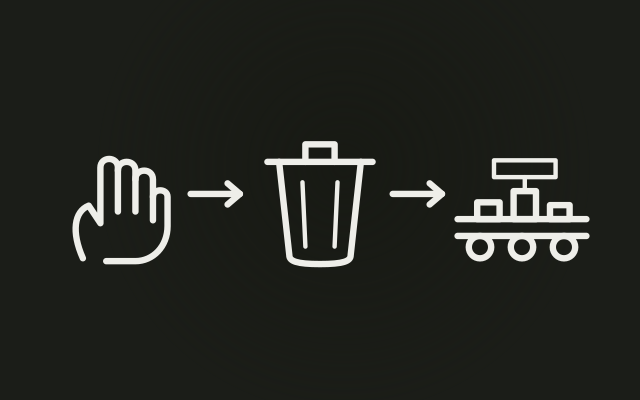
When a consumer buys a packet of alkaline batteries or a new lithium-powered device, the life cycle of that energy source eventually ends. In the past, millions of these depleted cells were simply thrown into household rubbish bins, sending highly toxic heavy metals into municipal landfills and incinerators where they could contaminate local soils and water tables. To stop this environmental hazard, modern waste frameworks mandate a complete separation of power cells from general refuse.
Instead of relying on local taxpayers to fund the specialist processing required for chemical waste, governments use extended producer responsibility to force the businesses that sell the batteries to pay for their recovery. The resulting infrastructure is the battery take-back system. By financing dedicated collection points in supermarkets, public buildings, and civic amenity sites, merchants ensure the materials they place on the market can be safely recovered, meeting aggressive statutory recycling quotas while securing their legal right to continue trading.
What a battery take-back system actually means
In practical terms, a take-back system is the operational bridge between a consumer discarding a product and a recycling facility extracting the raw materials. Because individual merchants cannot reasonably drive to every customer's house to collect empty batteries, they join collective compliance schemes. These schemes pool the financial contributions paid by thousands of producers and use those funds to deploy secure collection bins in retail stores and public spaces, and to contract the specialist logistics fleets needed to transport the hazardous waste.
"Regulation (EU) 2023/1542 aims to ensure that, in the future, batteries have a low carbon footprint, use minimal harmful substances, need fewer raw materials from non-European Union (EU) countries and are collected, reused and recycled to a high degree within the EU."
Once collected, the take-back system routes the batteries to highly engineered industrial sorting and processing plants. European legislation sets strict efficiency standards for these facilities to ensure the circular economy actually works. For example, by the end of 2025, recycling efficiency targets demand the recovery of 80 per cent of material for nickel-cadmium batteries, 75 per cent for lead-acid batteries, and 65 per cent for lithium-based batteries. By funding this system, brands actively reduce the European market's reliance on imported virgin minerals.
Does this apply to me?
If you manufacture, import, or distance-sell portable batteries or products that contain them to consumers, you are legally required to finance a battery take-back system in every market where you operate. The obligation falls on the entity that first introduces the battery to the national territory. Whether you sell replacement power tool packs, smart watches with integrated cells, or bulk disposable batteries, you must register your business and pay your share of the network's costs.
Retailers and distributors also face direct operational duties within these systems. In many jurisdictions, any physical store that sells portable batteries above a certain volume threshold is legally required to host a take-back collection bin on their premises, allowing consumers to drop off their old batteries free of charge. If you operate an online marketplace, you bear gatekeeper liability, meaning you must verify that your third-party sellers are registered and contributing to the national take-back system before you allow them to list their products.
Furthermore, to ensure the take-back system functions smoothly, the design of the products themselves is heavily regulated. To ensure collection facilities can actually reach the valuable chemicals, portable batteries incorporated into appliances must be removable and replaceable by the end user by 2027.
Key collection and recovery targets
The European framework sets aggressive statutory targets to ensure the take-back networks capture as much waste as possible, tracking both collection rates and specific mineral recovery thresholds.
| Metric or requirement | Target or deadline |
|---|---|
| Waste collection for portable batteries | 63% by the end of 2027 |
| Waste collection for portable batteries | 73% by the end of 2030 |
| Lithium recovery from waste batteries | 50% by the end of 2027 |
| Lithium recovery from waste batteries | 80% by the end of 2031 |
| Cobalt, copper, lead and nickel recovery | 90% by the end of 2027 |
| Collection for light means of transport (LMT) | 51% by the end of 2028 |
Legal reference: Regulation (EU) 2023/1542
Common misconceptions about battery take-back systems
My electronic waste scheme collects my batteries. While electronic waste schemes often run in parallel to battery networks, they are legally and financially distinct. The scheme managing the recovery of your plastic and metal circuit boards does not automatically cover the chemical power cell. You must ensure you are registered with and paying into a specific battery take-back system to cover the unique disposal costs of the cells.
I only sell rechargeable batteries, which are exempt. Both single-use primary batteries and rechargeable secondary batteries must be collected through the take-back infrastructure. Rechargeable lithium-ion batteries still contain toxic chemicals and highly valuable critical minerals that require safe handling and specialist extraction at the end of their usable life, making them heavily regulated under the same framework.
I have to collect my own batteries from customers. Unless you operate a highly specialised business-to-business product loop, you are not expected to drive to consumers' homes or manage your own fleet of recycling trucks. Most merchants comply by joining a Producer Responsibility Organisation, paying a fee based on the weight of batteries they sell, which funds a shared, national network of collection points.
5 examples of battery take-back compliance
1. Hosting a retail collection point A high street electronics retailer sets up a clear, fire-proof collection tube near their checkout desks. When customers buy new AA batteries, they drop their depleted cells into the tube, which is then emptied by a contracted waste carrier acting on behalf of the national take-back system.
2. Redesigning for removability An online brand sells portable Bluetooth speakers. To comply with the 2027 mandate requiring user-removable batteries, they change their product design from sealed, glued casings to panels with standard screws, ensuring the consumer can safely remove the dead battery and drop it into a take-back bin.
3. Reporting chemical volumes An importer of power tools calculates their annual sales data. Because different battery chemistries cost different amounts to process, the importer submits a detailed report to their take-back scheme, splitting the exact kilograms of lithium-ion batteries from the older lead-acid formats.
4. Funding LMT battery recovery A manufacturer of electric bicycles declares their sales to the national registry. Because batteries for light means of transport are specifically targeted by the new European regulations, the manufacturer's fees directly fund the specialist take-back network required to achieve the 51 per cent collection target by 2028.
5. Adding QR codes to packaging A battery brand updates its cardboard blister packs to include a QR code. By 2027, this digital marking will be mandatory, giving waste handlers and consumers instant access to the battery's chemical composition and recycled content, facilitating smoother processing once the item enters the take-back system.
Terms related to battery take-back systems
| Term | What it means |
|---|---|
| Portable Battery Registration (EU 2023/1542) | The strict European legal framework requiring merchants to register and fund the recycling of the batteries they sell. |
| Extended Producer Responsibility (EPR) | The environmental policy principle shifting the financial burden of waste management from the taxpayer to the producer. |
| Portable batteries (EPR) | The specific compliance obligations governing small, easily carried power cells used in consumer electronics and toys. |
| Waste Electrical and Electronic Equipment Directive | The European law governing the disposal of the physical electronic device, which operates separately from the battery rules. |
| Circular economy | An economic model designed to eliminate waste by keeping valuable materials, such as lithium and cobalt, in continuous use. |
Frequently asked questions
How does a battery take-back system work?
Take-back systems function through a combination of merchant funding and public participation. Producers declare the weight of the batteries they sell and pay a financial tariff. A central organisation uses these funds to manufacture collection bins, place them in accessible retail locations, arrange safe transport for the chemical waste, and pay industrial plants to extract the raw materials.
Do I need to set up my own collection network?
No. While large industrial or automotive manufacturers might sometimes operate closed-loop return systems, consumer brands typically join a collective scheme. By paying your extended producer responsibility fees to a national producer responsibility organisation, you fulfil your legal obligation to fund the system without needing to handle the physical waste yourself.
Are batteries from electric scooters included?
Yes. Batteries for light means of transport, such as electric bikes, e-mopeds, and e-scooters, are explicitly covered by the latest European battery regulations. Producers of these items must fund their specific recovery network, and these specific batteries must be replaceable by an independent professional to ensure they can eventually enter the take-back system safely.
What happens to the collected batteries?
Once collected from public bins, the batteries are transported to specialist facilities where they are sorted by chemistry type. They are then shredded or smelted through advanced mechanical and chemical processes to separate the hazardous elements from the valuable metals. Minerals like cobalt, nickel, and copper are recovered and sold back into the manufacturing supply chain to build new power cells.
Why are lithium recovery targets so important?
Lithium is a critical raw material essential for the transition to renewable energy and electric vehicles. Because Europe imports the vast majority of its virgin lithium from non-European countries, capturing the material from waste batteries is a strategic priority. The take-back system ensures this valuable resource is kept within the domestic circular economy, boosting supply chain security.
Sources:
Written by Daniel Vaknine, Co-founder – Compliance & Operations · Last reviewed 27 Jul 2026
Not sure what applies to you?
Answer a few questions about where you sell and see which packaging rules you fall under.
Check your obligations