Materials · Post-Consumer Recycled (PCR) Plastic
What is post-consumer recycled (PCR) plastic in packaging?
A guide to using recycled materials to meet European packaging targets and lower compliance fees
Post-consumer recycled (PCR) plastic is material recovered from plastic products that have been used by consumers or businesses and diverted from disposal. It is reprocessed into secondary raw materials to manufacture new packaging, fulfilling strict environmental quotas and reducing reliance on virgin fossil fuels.
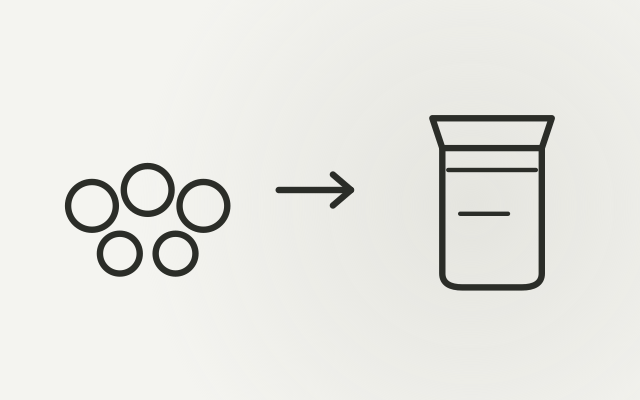
As regulators move to mandate the circular economy, simply designing a plastic package to be technically recyclable is no longer enough. The actual material used to create the packaging must increasingly come from previously used sources. For decades, it was significantly cheaper for brands to pump out single-use packaging made entirely from virgin petroleum. While millions of tonnes of plastic went into the residential recycling bin, the lack of commercial demand for the resulting baled waste meant the recycling industry struggled to scale effectively.
To correct this market failure, modern environmental frameworks artificially stimulate demand by forcing merchants to buy and use recycled materials. By legislating mandatory inclusion targets and linking extended producer responsibility fees directly to the percentage of recycled content, governments are ensuring that post-consumer plastic becomes a highly valuable global commodity. Understanding how to source, verify, and report this material is now a critical supply chain requirement for any business shipping physical goods.
What post-consumer recycled plastic actually means
In regulatory terms, the definition of this material relies entirely on its origin. Post-consumer plastic waste specifically refers to plastic generated from products that have already completed their intended life cycle. This means the plastic was placed on the market, purchased, used, and discarded by an end user in a residential or commercial setting, before being collected by a municipal or private waste fleet.
It is strictly differentiated from pre-consumer or post-industrial waste, which involves factory offcuts or manufacturing scraps that are simply swept off the production floor and melted back down before they ever reach a consumer. The European Union's Packaging and Packaging Waste Regulation codifies this distinction to ensure businesses are actively funding the recovery of real-world waste.
"'post-consumer plastic waste' means waste that is plastic and that has been generated from plastic products that have been placed on the market or supplied for distribution, consumption or use in a third country in the course of a commercial activity, whether in return for payment or free of charge".
To use this material in new packaging, the recovered waste must undergo extensive checking, sorting, washing, and reprocessing. Once it reaches a sufficient quality to substitute primary virgin raw materials, it is legally classified as a secondary raw material. Brands then purchase these secondary resins, such as PCR polyethylene terephthalate (PET) or PCR high-density polyethylene (HDPE), and blend them into their packaging production lines to lower their environmental footprint.
Does this apply to me?
If you manufacture plastic packaging, import plastic-packaged goods, or distance-sell items wrapped in plastic into regulated markets, the rules surrounding post-consumer recycled plastic apply directly to your business. The legal and financial burdens fall on the producer who first introduces the packaging to the local market.
Under sweeping new European regulations, incorporating this material is shifting from a voluntary sustainability claim into a mandatory market access condition. Importers and domestic merchants alike will have to prove exactly how much post-consumer waste is embedded in their plastic packaging. If you rely entirely on virgin plastics, you will face severe financial penalties from your compliance schemes, and eventually, your packaging will be banned from the market for failing to meet statutory inclusion quotas.
There are limited exemptions available. For instance, the European rules currently exempt small plastic components that represent less than a specific percentage of the total packaging weight. There are also exemptions for plastic packaging intended to come into contact with food, where using recycled content would pose a direct threat to human health and violate strict food-contact safety frameworks.
Minimum recycled content targets and deadlines
The legal framework imposes strict calculation rules and verification methodologies to ensure brands cannot falsify their recycled content declarations. Extended producer responsibility schemes actively use these percentages to modulate the fees they charge merchants.
| Rule or threshold | Detail | Legal reference |
|---|---|---|
| Definition of post-consumer plastic waste | Sourced from products placed on the market or supplied for use | PPWR Article 3 |
| Plastic part exemption | Any plastic part representing less than 5% of the total packaging unit weight is exempt | PPWR Article 7 |
| Food-contact exemption | Exempt if recycled content poses a health threat under Regulation (EC) No 1935/2004 | PPWR Article 7 |
| Calculation methodology deadline | Implementing acts for calculating and verifying the percentage due by 31 December 2026 | PPWR Article 7 |
| Fee modulation | EPR contributions may be modulated based on the percentage of recycled content used | PPWR Article 7 |
Common misconceptions about post-consumer recycled plastic
Post-industrial scrap counts towards my PCR targets. This is a frequent compliance error. Using the scrap plastic that falls off your own factory assembly line is considered pre-consumer recycling. While this is efficient manufacturing, it does not count as post-consumer recycled plastic because the material never entered the public market and was never recovered from a consumer waste stream.
Using biobased plastics exempts me from recycled content rules. Biobased plastics made from plants or agricultural waste are treated separately from post-consumer recycled plastics. While regulators may introduce future flexibility to use biobased feedstocks if safe food-contact recyclates are unavailable, simply swapping virgin petroleum plastic for virgin plant-based plastic does not automatically satisfy the primary statutory quotas for post-consumer recycled content.
I only need a letter from my supplier to prove compliance. A simple written assurance from an overseas factory is insufficient to prove your packaging contains the required post-consumer material. Regulators require strict chain-of-custody documentation and formal technical files. By 2026, the European Commission will establish an exact verification methodology, which may include mandatory independent third-party audits of the manufacturing facilities to ensure the material genuinely originates from post-consumer waste.
Adding recycled content makes my packaging automatically recyclable. Sourcing post-consumer material and designing for end-of-life recyclability are two distinct legal obligations. You can manufacture a bottle using 100% post-consumer plastic, but if you wrap it in an inseparable, multi-layered metal sleeve, the sorting facility cannot recycle it. The packaging must still pass a strict design-for-recycling assessment regardless of how much secondary raw material it contains.
5 examples of using post-consumer recycled plastic
1. Substituting virgin PET in beverage bottles A drinks manufacturer redesigns its clear water bottles to incorporate a high percentage of post-consumer recycled PET, sourced from municipal bottle collections. This allows the brand to meet incoming regulatory quotas while avoiding the high extended producer responsibility penalties applied to virgin plastics.
2. Procuring recycled flexible films An e-commerce clothing retailer switches its standard polythene mailing bags to versions manufactured using post-consumer recycled film recovered from commercial retail waste.
3. Modulating compliance scheme invoices A cosmetics brand declares its annual packaging volumes to its national producer responsibility organisation. Because the brand proves its shampoo bottles are manufactured entirely from post-consumer high-density polyethylene, the compliance scheme applies a heavy eco-modulation discount to their final invoice.
4. Claiming the food-contact health exemption An importer of raw meat uses a highly specialised plastic vacuum pack. Because current mechanical recycling technologies cannot yield secondary plastics clean enough to guarantee the absence of dangerous contaminants touching the raw meat, the importer legally bypasses the mandatory recycled content quota under the human health exemption.
5. Excluding minor plastic components A manufacturer produces a large cardboard presentation box that relies on a tiny plastic hinge to keep the lid closed. Because the plastic hinge weighs just 2% of the total packaging unit, the manufacturer does not need to source a post-consumer recycled version of the hinge to comply with the European quotas.
Terms related to post-consumer recycled plastic
| Term | What it means |
|---|---|
| Packaging and Packaging Waste Regulation (PPWR) | The European Union law introducing strict, harmonised rules on packaging design and mandatory recycled content quotas. |
| Eco-modulation | A financial mechanism where compliance schemes charge lower fees for packaging that incorporates secondary raw materials. |
| Mono-material packaging | Packaging made from a single material stream, which provides the clean, high-quality waste needed to create good post-consumer recyclate. |
| Circular economy | An economic system designed to keep materials at their highest value through continuous cycles of use and reprocessing. |
Frequently asked questions
What is the difference between PCR and virgin plastic?
Virgin plastic is newly manufactured directly from extracted fossil fuels, typically crude oil or natural gas. Post-consumer recycled plastic is manufactured from existing plastic products that have been used by consumers, collected from the waste stream, washed, shredded, and melted down into secondary pellets to be used again.
How do regulators verify my recycled content?
You cannot rely on estimates. Compliance must be formally demonstrated within your technical documentation. The European Commission is tasked with publishing specific implementing acts by the end of 2026 detailing the exact methodology for calculation and verification, which is highly likely to require continuous chain-of-custody certification and independent third-party audits of your manufacturing supply chain.
Is it more expensive to use post-consumer plastic?
Historically, high-quality, food-grade secondary plastics have sometimes carried a price premium over cheap virgin petroleum plastics due to the intensive sorting and cleaning processes required. However, incoming regulations use eco-modulated extended producer responsibility fees to heavily penalise virgin plastic, effectively making post-consumer materials the more cost-effective choice for merchants overall.
Can I use ocean plastic to meet my targets?
If the plastic was genuinely recovered from the environment or beach clean-ups after being discarded by consumers, it technically meets the definition of a post-consumer material. However, tracing the exact origin and ensuring the degraded plastic meets the high-quality technical specifications required for modern packaging machinery is extremely difficult compared to using material sourced from formal municipal collection networks.
Do the rules apply if the plastic part is very small?
No. The European regulations include a practical exemption for minor components. The requirement to incorporate mandatory minimum percentages of recycled content does not apply to any plastic part that represents less than 5% of the total weight of the whole packaging unit.
Sources:
Written by Daniel Vaknine, Co-founder – Compliance & Operations · Last reviewed 27 Jul 2026
Not sure what applies to you?
Answer a few questions about where you sell and see which packaging rules you fall under.
Check your obligations