EPR in Czech Republic: EKO-KOM & Seznam osob
Selling into the Czech Republic means registering in Seznam osob and paying EKO-KOM packaging fees by material, with no minimum threshold to trigger it.

At a glance
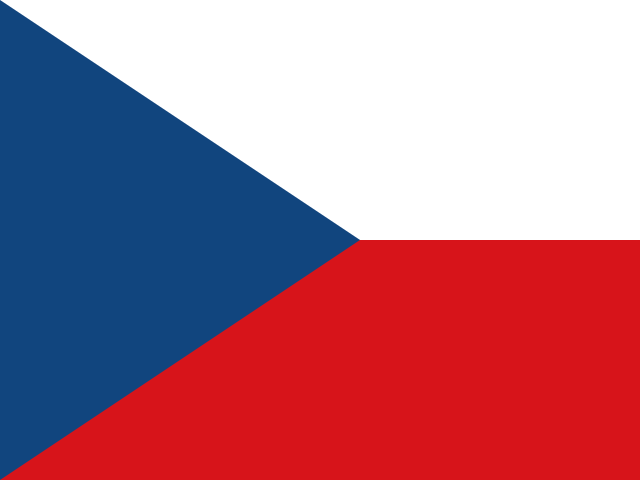 EPR streams in Czech Republic
Each stream carries its own producer duty, register and deadline here.
Active now
· 5- PackagingIn force
- WEEE / electronicsIn force since 4 July 2012
- BatteriesIn force since 18 August 2025
- Single-use plasticsIn force since 3 July 2021
- TyresIn force
Partial duties
· 1- End-of-life vehiclesPartial since 21 October 2000
Upcoming
· 2- TextilesFrom 17 April 2028
- Fishing gearAdopted, not yet operational
Facts last reviewed 17 July 2026
To sell packaged goods into the Czech Republic you register your packaging in the Seznam osob list and, in practice, join EKO-KOM, the single authorised packaging scheme that has run the country's recovery system for over two decades. There is no threshold to cross first: the duty attaches to the first unit of packaging you place on the Czech market. What makes Czechia distinctive is that near-monopoly. One scheme sets the material tariffs almost everyone pays, which makes your compliance straightforward to map, but leaves you with little room to shop around on price.
Understanding that structure is the shortcut to Extended Producer Responsibility here. Work out which of the two national registers your products belong in, affiliate with the right scheme, and report your volumes accurately to the Ministry of the Environment.
EKO-KOM: the only authorised packaging scheme (for now)
Packaging is where most online sellers meet Czech EPR, and here the market runs through one door. Under the Packaging Act (Act 477/2001), you can technically fulfil your recovery and recycling obligations individually, but the practical route almost everyone takes is to affiliate with EKO-KOM, the country's authorised producer responsibility organisation. You declare the packaging you place on the market by material and weight, and EKO-KOM invoices a contribution scaled to that footprint. There is no flat annual sticker price: a business shipping mostly lightweight cardboard pays very differently from one shipping heavy glass or mixed plastics.
That single-scheme position is worth watching rather than assuming as permanent. A challenger, REMA AOS, has had an application pending with the ministry for some time and even runs a trial reporting portal, but no second scheme has been authorised to date. For now, treat EKO-KOM as the effective single counterparty for packaging while keeping an eye out for a competitor licence. If a second scheme is authorised, you would gain a genuine choice of provider for the first time.
Two registers, two laws: Seznam osob and Seznam vyrobcu
Czechia keeps producer responsibility on two lists under two laws, both overseen by the same regulator. The split decides which list holds your registration, not who you answer to.
- Seznam osob is the packaging register under Act 477/2001. This is the entry point for anyone shipping packaged goods, and it pairs with the EKO-KOM affiliation described above.
- Seznam vyrobcu is the register for "selected products" under the End-of-Life Products Act (Act 542/2020): electrical and electronic equipment, batteries, and tyres. Electronics duties have applied since 4 July 2012, tyres run under a national scheme, and battery obligations follow the EU Batteries Regulation (EU) 2023/1542, in force from 18 August 2025.
Both lists are administered by the Ministry of the Environment (MZP) through the MZP's VISOH2 information system. One quirk is worth flagging for sellers of electronics and tyres: the recycling fee must be itemised separately on invoices for those products, but for batteries the law bars you from listing it separately. An amendment before the Czech Parliament would move battery reporting to the Regulation's five-category model, so the detail of what you report is likely to shift.
End-of-life vehicles are the deliberate gap. The Czech Republic runs only partial producer responsibility for vehicles under the ELV Directive 2000/53/EC, and vehicles are excluded from the end-of-life producer register, running a separate take-back arrangement instead. Single-use plastics carry their own duties under the EU Single-Use Plastics Directive, applicable since 3 July 2021, and plastic fishing gear adds a lighter record-keeping duty that is still being brought fully into scope.
No direct registration for non-residents, unlike Germany
The duty reaches producers, importers, and distance sellers who place goods on the Czech market. Because there is no minimum threshold, an online store shipping directly to Czech consumers is an obligated producer from its first order. Producers file an annual report to the ministry unless a collective scheme, such as EKO-KOM for packaging, reports on their behalf.
The point that trips up cross-border sellers is representation. For single-use plastics, a foreign producer of the listed items must appoint a Czech authorised representative, and that route is used across the registered streams. Unlike EPR in Germany, where a foreign seller can register directly from abroad, a non-resident distance seller in Czechia works through a locally established representative who holds the registration and manages ongoing reporting.
If you sell only furniture, toys, graphic paper, DIY and garden goods, sports and leisure equipment, construction materials, waste oils, or recreational boats, note that the Czech Republic operates no EPR scheme for those categories today. In that case, your only live duty is likely to be for the packaging around them, plus any batteries or electronics built into the product. When in doubt, check which EPR duties apply to you before you ship.
The EKO-KOM contribution, and the registers the Ministry polices
Packaging costs are driven almost entirely by your EKO-KOM contribution, calculated on the exact material mix and weight you place on the market, so the honest answer to "what will it cost" is "it depends on what you ship". Electronics, batteries, and tyres carry their own recovery contributions on top, reflecting the cost of collecting and treating each product at end of life. Foreign sellers should also budget for the professional fees of the authorised representative who fronts their registration.
The Ministry of the Environment maintains the national registers and oversees compliance. Selling into the market without a valid registration puts your listings and market access at risk, since a missing registration number is the first thing a compliance check looks for. Getting the registration and the reporting right is far cheaper than unwinding a suspension after the fact.
Deposit-return: not live in Czechia, but PPWR is pushing for it
The Czech Republic has no operational national deposit-return system at the time of writing. The pressure is coming from the EU rather than a domestic scheme already in place: the Packaging and Packaging Waste Regulation requires member states to reach a 90% separate-collection rate for single-use plastic beverage bottles and metal cans by 2029, and a deposit-return system is the usual way to hit that target. If you sell beverages in those formats, check the current status before you ship, and treat any future deposit scheme as separate from your EKO-KOM packaging obligations rather than a replacement for them.
The compliance calendar for Czech sellers
| Date | What applies |
|---|---|
| 21 October 2000 | End-of-life vehicles fall under the ELV Directive 2000/53/EC (partial EPR; vehicles sit outside the producer register) |
| 4 July 2012 | WEEE obligations apply; electronics producers register in Seznam vyrobcu |
| 3 July 2021 | Single-use plastics duties apply under the EU directive |
| 1 January 2025 | Separate municipal textile collection becomes mandatory |
| 18 August 2025 | EU Batteries Regulation (EU) 2023/1542 EPR obligations apply |
| 12 August 2026 | The Packaging and Packaging Waste Regulation (PPWR) applies across the EU |
| 17 April 2028 | A textile and footwear EPR scheme must be in place under the 2025 EU textiles directive |
| 2029 | PPWR's 90% separate-collection target for single-use plastic bottles and cans takes effect |
Sources:
Frequently asked questions
- Do I need to register with EKO-KOM to sell in the Czech Republic?
- In practice, yes. EKO-KOM is the only authorised packaging scheme in the Czech Republic, so packaging producers either take the individual-compliance route or affiliate with EKO-KOM to meet their recovery obligations. You report your packaging volumes by material and weight and pay a contribution based on that footprint.
- Is there a minimum sales threshold for EPR in the Czech Republic?
- No. There is no minimum sales or weight threshold. The obligation attaches to the first unit of packaged goods you place on the Czech market, so an obligation exists from your very first order shipped to a Czech customer.
- Do foreign online sellers need a Czech authorised representative?
- For single-use plastics, a foreign producer of the listed items must appoint a Czech authorised representative, and the same route is used across the registered streams. A non-resident distance seller cannot register in the same self-service way Germany allows, so budget for a local representative to hold your registration and file your reports.
- What is the difference between Seznam osob and Seznam vyrobcu?
- Seznam osob is the packaging producer list under Act 477/2001. Seznam vyrobcu is the list for producers of electronics, batteries, and tyres under Act 542/2020. Both are held by the Ministry of the Environment (MZP) through the VISOH2 information system, so the split is about which list holds your entry, not who oversees it.
- Does the Czech Republic have a deposit-return system?
- Not an operational national one at the time of writing. The EU's Packaging and Packaging Waste Regulation requires member states to reach a 90% separate-collection rate for single-use plastic bottles and metal cans by 2029, which pushes countries toward a deposit-return system. Any such scheme would run separately from EKO-KOM packaging EPR.