E-waste · WEEE Take-Back Concept (Germany)
What is a WEEE take-back concept in Germany?
A guide to managing the end-of-life recovery of professional electronic equipment
A WEEE take-back concept is a mandatory logistical plan submitted to the German environmental authorities, detailing how a producer of professional electrical and electronic equipment intends to physically retrieve and recycle their devices at the end of their commercial lifespan.
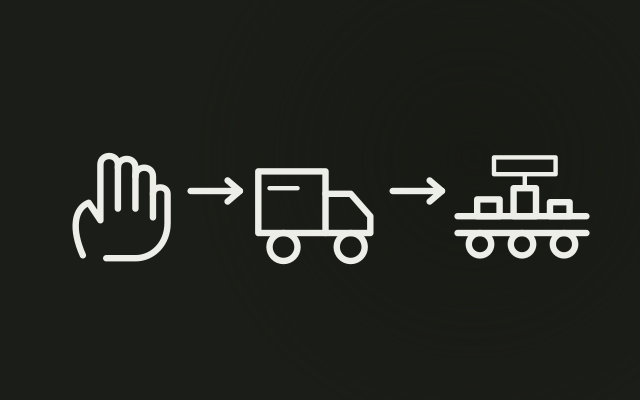
When selling electronics in Europe, the primary regulatory focus rests on protecting municipal household recycling systems. For standard consumer goods, merchants achieve this by paying a financial guarantee to a commercial compliance scheme. However, the German market treats heavy, highly specialised, or exclusively commercial hardware entirely differently. If a device is built strictly for business-to-business use, the government does not want it entering the public waste stream at all.
To guarantee these industrial items are handled correctly, the regulatory framework shifts the operational burden directly onto the manufacturer or importer. Instead of paying into a public fund, the merchant must design and present a structured recovery plan before they are legally allowed to trade. This recovery plan acts as a formal commitment, proving the business possesses the commercial networks required to pull their own electronics out of the market once the professional buyer is finished using them.
What a take-back concept actually means
In the German extended producer responsibility system, every merchant placing electrical and electronic equipment on the market must register with the central authority. When a merchant categorises their equipment as professional hardware, the authorities require them to formally substantiate that claim. This involves a strict administrative procedure. First, the merchant must provide prima facie evidence proving that the items are genuinely excluded from private households. Second, the merchant must upload a logistical plan directly into the registration portal.
"If you place equipment on the market that is generally not used in private households, you must substantiate that. Additionally, you must explain in the application how you take back this equipment from the customer, i.e. Submit a take-back concept."
The concept itself is a highly practical logistics document. It outlines the exact mechanisms the merchant will use to recover the waste equipment from their business customers. This might involve setting up a dedicated return portal on a corporate website, partnering with specialised industrial recycling couriers, or stipulating return conditions in the original sales contracts. The central authority reviews this document to verify that the proposed solution is realistic, funded, and capable of keeping the commercial waste out of municipal sorting facilities.
Does this apply to me?
If you manufacture, import, or sell electrical and electronic equipment in Germany that is exclusively designed for commercial, industrial, or institutional environments, you must submit a take-back concept. This obligation falls on the entity legally defined as the producer.
You cannot declare an item as professional equipment simply because you sell it to a business. If a device could conceivably be used by a private consumer in a domestic setting, the authorities will classify it as dual-use. Dual-use items are treated as consumer goods under the law. If your product is classified as dual-use, you cannot use a take-back concept to achieve compliance. Instead, you must secure an insolvency safe guarantee, which carries entirely different financial and administrative obligations.
The take-back concept applies exclusively when you can definitively prove the item’s size, power requirements, or operational complexity restricts it strictly to professional users. Furthermore, if you are a foreign seller without a registered branch in Germany, you cannot submit this concept yourself. You must appoint an authorised representative to handle the submission and hold the registration on your behalf.
Administrative fees and processing details
Filing a recovery plan involves strict administrative steps and statutory fees managed by the national clearing house.
| Regulatory element | Processing detail | Legal reference |
|---|---|---|
| Application processing time | Expected to take between 3 and 4 weeks for a complete and correct application. | stiftung ear guidelines |
| Base registration fee | Accrues according to fee-related matter number 1.1 of the fee regulation. | ElektroBattGGebV |
| B2B evidence fee | Examination of prima facie evidence for professional equipment accrues under fee matter 1.7. | ElektroBattGGebV |
| Quarterly maintenance fee | Accrues according to fee-related matter number 1.2 for each started quarterly period. | ElektroBattGGebV |
Common misconceptions about the take-back concept
Business customers handle their own waste. The producer is legally obligated to manage the end-of-life process for the professional hardware they supply. You cannot force the commercial buyer to find their own recycling plant or leave the disposal up to their internal facilities team. Your business must actively offer and facilitate the return of the equipment.
A simple promise to collect is sufficient. The authorities require a tangible, workable plan before they will grant a registration number. The submitted concept must detail the actual physical mechanisms, contact channels, and logistical partners involved in retrieving the equipment from the commercial premises. Vague statements of intent will be rejected by the examiners.
The concept works for standard office laptops. Standard office equipment like laptops, desktop monitors, or basic printers are almost always classified as dual-use because private consumers frequently use identical models at home. The take-back concept is reserved for genuinely exclusive industrial or commercial hardware that would never appear in a residential setting.
5 examples of professional take-back concepts
1. Managing industrial server racks A merchant selling massive data centre equipment submits a concept detailing how their technicians will dismantle and transport the obsolete units back to a specialised recycling facility, guaranteeing the hardware never enters municipal waste.
2. Recovering medical imaging devices An importer of hospital MRI machines outlines a reverse logistics contract within their application, demonstrating a formal agreement with a certified medical waste handler to safely recover the equipment from clinics.
3. Retrieving commercial coffee roasters A manufacturer of heavy-duty cafe espresso machines includes a return shipping clause in their commercial leasing contracts, explaining that they retain ownership and will dispatch a private freight service to retrieve old units.
4. Collecting agricultural monitoring systems A brand supplying digital soil sensors for commercial farming provides an online portal where farmers can request a courier pickup for broken devices, proving they have an active contract with a rural logistics network.
5. Removing retail display screens A distributor of large digital advertising boards for shopping centres arranges a dedicated collection service using their own delivery fleet, showing that whenever their teams fit a new screen, they remove and recycle the old hardware.
Terms related to WEEE Take-Back Concept (Germany)
| Term | What it means |
|---|---|
| weee-reg-nr-germany | The unique eight-digit identification number granted to a merchant once their registration and take-back plans are approved. |
| stiftung-ear-germany-weee | The national clearing house that reviews the prima facie evidence and approves the logistical recovery plans. |
| elektro-und-elektronikger-tegesetz-elektrog-germany-weee | The federal legislation that dictates the rules for commercial equipment disposal in Germany. |
| weee-manufacturer-s-authorized-representative-ar | A domestic legal entity appointed to submit the recovery plans on behalf of a foreign business that lacks a German branch. |
Frequently asked questions
How long does it take for my concept to be approved?
The review of your recovery plan is part of the formal registration process. If you submit a complete and correct application through the portal, providing all necessary documents and brand specifications, you can normally expect the procedure to take between 3 and 4 weeks.
What is prima facie evidence?
Before the authorities even look at your recovery plan, you must prove that the hardware belongs in the professional category. Prima facie evidence is the documentation you submit to explain that your equipment is generally not used in private households. This often relies on proving the device requires special industrial power supplies, professional installation, or operating licences.
Do I have to pay fees for this assessment?
Yes. The central authority charges specific administrative tariffs for reviewing your application. You will pay a base registration fee for the brand and equipment type, which accrues according to fee-related matter number 1.1, alongside an additional charge for the examination of your prima facie evidence under fee-related matter number 1.7.
What happens if my equipment is considered dual-use?
If the environmental authorities decide your product could theoretically be bought and used by a private consumer, they will reject your professional classification. At that point, your recovery plan becomes invalid for registration purposes, and you will be forced to submit a formal insolvency safe guarantee to cover the potential costs of municipal recycling.
Does a foreign company need to submit a recovery plan?
The obligations apply to the entity placing the hardware on the German market. If you are an international merchant without a registered domestic branch, you cannot submit the documentation yourself. You must appoint a legally recognised authorised representative in Germany to upload the recovery plan and hold the registration on your behalf.
Sources:
Written by Daniel Vaknine, Co-founder – Compliance & Operations · Last reviewed 27 Jul 2026
Not sure what applies to you?
Answer a few questions about where you sell and see which packaging rules you fall under.
Check your obligations