Global · Chasing Arrows Symbol Ban (California)
What is the California chasing arrows symbol ban (SB 343)?
A guide to California’s strict rules on when packaging can display the recycling symbol
The California chasing arrows symbol ban, formally established by SB 343, is a state law prohibiting manufacturers from displaying the universal recycling symbol on products or packaging unless the materials meet strict, state-specific criteria to be legally classified as recyclable.
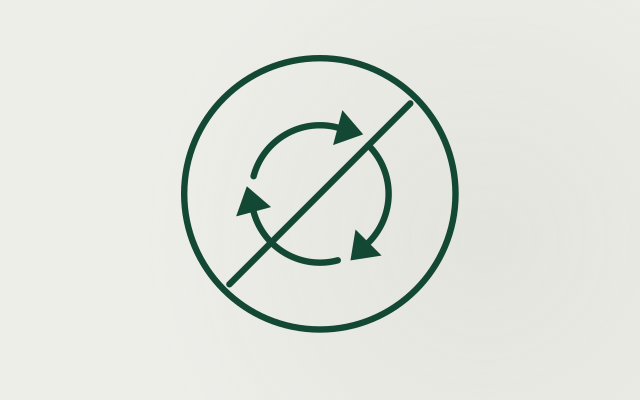
For decades, the chasing arrows symbol has been printed on almost every consumer package, often wrapped around a plastic resin code. This practice led to widespread consumer confusion, as the presence of the arrows strongly implies that an item will be recycled if placed in a kerbside bin. In reality, many of these materials lack the municipal infrastructure or end-market demand required for actual recovery, meaning they end up in landfill despite bearing the famous recycling emblem.
To combat this greenwashing, California passed legislation in 2021 that fundamentally changes how environmental marketing works in the state. The law removes the manufacturer's freedom to self-declare an item as recyclable. Instead, the state government now acts as the ultimate arbiter, publishing a definitive list of materials that are genuinely recovered at scale. If a brand's packaging is not on that list, displaying the chasing arrows or making any unqualified recyclability claims within California becomes a deceptive marketing offence. For national and international brands, this forces a drastic redesign of how they communicate their environmental credentials on-pack.
What the chasing arrows symbol ban actually means
Under California's SB 343, the use of the chasing arrows symbol is heavily regulated and tied directly to the state's physical waste infrastructure. To earn the right to use the symbol, a material must be collected by municipal recycling programmes covering a significant proportion of the state's population and routinely sorted into defined commercial streams by local recovery facilities.
"Passed in 2021, SB 343 dictates which products and packaging can display the 'chasing arrows' recycling symbol."
The state agency, CalRecycle, enforces this by producing a Material Characterization Study, which evaluates the actual recycling rates for covered material categories and generates a definitive list indicating whether a specific format is officially designated as recyclable. If your material format is not granted this official designation, you are legally barred from printing the chasing arrows on it for the Californian market.
Crucially, the legislation takes an aggressive stance against the use of explanatory text. Under federal guidelines, brands traditionally circumvented strict rules by using qualified statements to explain their recycling claims. However, under the California ban, qualified statements and contextual disclosures are entirely prohibited. Even factually accurate instructions such as telling the consumer to check locally for recycling options are forbidden if the underlying material does not meet the state's strict overarching criteria.
Does this apply to me?
If you manufacture consumer goods, import packaged items, or distance-sell products into California, this law directly impacts your packaging artwork. Because California represents the largest consumer market in the United States, very few global brands can afford to create completely separate packaging inventories just for this one state. Consequently, the Californian rules effectively force a nationwide, or even global, redesign of printed packaging artwork.
The restrictions apply broadly to consumer packaging and products. If your packaging historically relied on the chasing arrows surrounding a Society of the Plastics Industry resin identification code, which is now formally covered by the ASTM D7611 standard, you must assess whether that specific plastic resin is actually recycled at scale in California. Lightweight plastic films, mixed-material pouches, and certain rigid plastics are frequently excluded from the state's approved list, meaning their artwork must be stripped of any recycling indicators.
Furthermore, compliance is not something a merchant can put off indefinitely. The strict enforcement of SB 343 is scheduled to take effect in October 2026. Brands that fail to audit their labels and remove prohibited symbols before this enforcement date risk heavy penalties for deceptive environmental marketing.
Regulatory timelines and federal guidelines
Understanding the California ban requires mapping it against both state deadlines and overarching federal advertising rules regarding recyclability claims.
| Rule or Deadline | Detail | Legal Reference |
|---|---|---|
| SB 343 passage | The legislation restricting the recycling symbol was officially passed in 2021. | SB 343 timeline |
| Enforcement date | Enforcement of the symbol ban takes effect in October 2026. | SB 343 timeline |
| Qualified statements | Accurate statements like "check locally for recycling options" are prohibited under the ban. | SB 343 text |
| State material list | CalRecycle updates its Material Characterization Study to designate what is recyclable. | CMC list |
| Federal green guides | The FTC Green Guides advise that unqualified recyclable claims require availability to a substantial majority (at least 60 per cent) of consumers. | 16 CFR Part 260.12 |
Common misconceptions about the chasing arrows symbol ban
The chasing arrows symbol is a legally required plastic code. This is a common and outdated belief. While the chasing arrows were historically wrapped around the resin identification number to help sorting facilities identify plastic types, the symbol itself is not a mandatory legal requirement for consumer products. Because the arrows imply recyclability to the general public, California now restricts their use entirely unless the material is genuinely recycled.
I can just add "check locally" under the symbol. Under the federal Green Guides, adding a qualified statement is often recommended when recycling access is limited across the country. However, California's SB 343 explicitly forbids this approach. No contextual disclosures or qualified statements are permitted if the item fails the state's baseline recyclability test, meaning "check locally" is no longer a legal defence.
The ban only applies to single-use plastics. While the legislation is heavily focused on combating plastic pollution, the rules regarding deceptive environmental marketing apply to all packaging materials. If a brand attempts to put the chasing arrows on a complex, multi-material paper carton that cannot be processed by Californian paper mills, they are in violation of the law just as much as a plastic manufacturer.
This law is exactly the same as California SB 54. These are two distinct pieces of legislation that operate in parallel. SB 54 is the state's extended producer responsibility law, which forces producers to physically fund and manage recycling networks. SB 343 is a marketing and labelling law that dictates what you are allowed to print on the box. You must comply with both simultaneously.
5 examples of the symbol ban in practice
1. Stripping arrows from flexible plastic films A brand uses flexible plastic pouches for its snack foods. Because these multi-layer films are not routinely recovered at scale by Californian municipal facilities, the brand must redesign its packaging to completely remove the chasing arrows symbol before the October 2026 deadline.
2. Retaining the symbol on clear PET bottles A beverage manufacturer sells water in transparent PET plastic bottles. Since CalRecycle data confirms these bottles have high collection and reprocessing rates across the state, the manufacturer is legally permitted to keep the universal recycling symbol on the label.
3. Facing legal challenges Industry groups opposed to the strict prohibitions file lawsuits seeking a preliminary injunction, arguing that banning accurate qualified statements like "recyclable where facilities exist" infringes on First Amendment rights, aiming to preclude enforcement before October 2026.
4. Reformatting the resin identification code A cosmetics company historically placed the chasing arrows around a number 5 (PP) on the bottom of its tubs. To comply with the new rules, the company replaces the arrows with a solid equilateral triangle, maintaining the necessary material identification for industry without illegally implying consumer recyclability.
5. Updating national artwork inventories A global electronics merchant realises they cannot segment their supply chain to send different boxes just to California. To ensure total compliance, they decide to remove the chasing arrows from their entire North American packaging inventory, opting for a plain text material composition label instead.
Terms related to the Chasing Arrows Symbol Ban
| Term | What it means |
|---|---|
| california-sb-54-plastic-pollution-prevention-act | The Californian extended producer responsibility law that forces businesses to fund municipal recycling networks. |
| extended-producer-responsibility-epr | The global policy framework that holds brands financially accountable for the end-of-life impact of their packaging. |
| recyclability-performance-grades | Systems that evaluate and score how easily a specific packaging format can be processed by local waste infrastructure. |
| packaging-and-packaging-waste-regulation-ppwr | The European Union law that dictates strict environmental labelling and design rules across the continent. |
Frequently asked questions
What is the purpose of California SB 343?
The primary goal of the legislation is to eliminate greenwashing and consumer confusion. By banning the chasing arrows symbol on items that are not actually recycled in practice, the state aims to stop consumers from throwing non-recyclable materials into kerbside bins, which heavily contaminates the municipal waste stream.
What happens if I keep the symbol on non-compliant packaging?
If your packaging is not on the state's approved list of recyclable materials and you continue to display the chasing arrows after the enforcement date, you will be committing a deceptive environmental marketing offence. This exposes your business to regulatory scrutiny, severe financial penalties, and potential class-action lawsuits.
Can I use the symbol if I pay for a private recycling scheme?
No. The California legislation evaluates recyclability based on the widespread availability of municipal kerbside collection and routine processing by state-wide sorting facilities. Funding a private, mail-back recycling scheme for your specific product does not grant you the right to print the universal chasing arrows on the box.
When does the ban take effect?
While the legislation was officially passed in 2021, the strict enforcement of the symbol ban is scheduled to take effect in October 2026. This lead time was designed to allow the state to gather material characterisation data and give businesses sufficient time to exhaust old packaging stock and redesign their artwork.
Does this overrule the federal Green Guides?
While the Federal Trade Commission's Green Guides provide overarching national rules for environmental marketing, individual states have the right to enforce stricter consumer protection laws. The California ban operates as a stricter, state-specific mandate that effectively prohibits the qualified claims that the federal guides previously permitted.
Sources:
Written by Daniel Vaknine, Co-founder – Compliance & Operations · Last reviewed 27 Jul 2026
Not sure what applies to you?
Answer a few questions about where you sell and see which packaging rules you fall under.
Check your obligations