EPR vs PPWR: The Difference Explained (2026)
EPR is the principle; PPWR is the new EU law enforcing it from Aug 2026. Here's how they fit together and what each means for online sellers.

EPR vs PPWR: What's the Difference?
The world of European packaging compliance is full of confusing acronyms. If you sell physical goods online, you must understand how European Commission packaging waste regulations impacts your business. In short: EPR is the long-standing financial principle that makes you pay for your packaging waste, while PPWR is the strict new EU law dictating how that packaging must be designed and reported. Here is exactly how these two frameworks fit together and what they mean for your e-commerce store.
What is EPR? The established principle
To understand the difference, you first need to grasp the baseline. Extended Producer Responsibility (EPR) is an environmental policy principle holding businesses financially responsible for the end-of-life recycling of the products and packaging they introduce to a market.
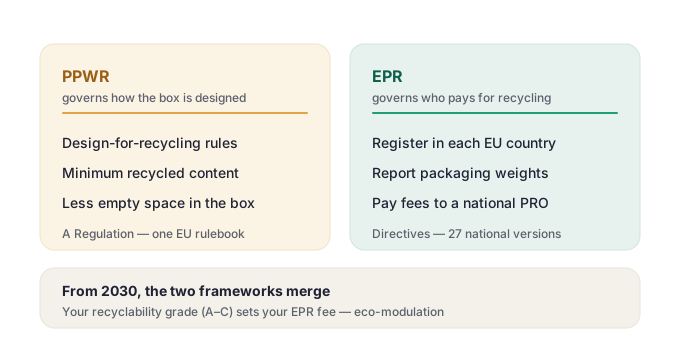
Historically, EPR was rolled out through a series of the EU Directive on packaging and packaging waste 2018/852. Because it was based on directives, every single EU member state translated the rules into their own national laws differently. This is why What is EPR can be so difficult to answer for cross-border sellers: Germany has LUCID, France has SYDEREP, and Sweden has Naturvårdsverket. You must register, report your packaging weights, and pay local fees in each country separately.
What is PPWR? The new EU law
The Packaging and Packaging Waste Regulation (PPWR) is a comprehensive new legal framework that will take effect on 12 August 2026 via Regulation (EU) 2025/40.
While EPR focuses primarily on the financial responsibility of waste collection, the PPWR in simple terms is about the physical packaging itself. The regulation mandates that all packaging placed on the EU market must meet strict design-for-recycling criteria, contain minimum recycled content for plastics, and minimize empty void fill.
The main difference: Directive vs Regulation
The most critical difference between EPR and PPWR lies in how the laws are applied across borders.
Past EPR frameworks were based on the legal format of a directive. Directives require national transposition, resulting in 27 different sets of rules, thresholds, and reporting portals. The PPWR, however, is a regulation. A regulation is directly binding and identical across the entire European Union. It creates a harmonized set of rules for packaging design and standardizes the format of the data you must eventually report.
Is PPWR replacing EPR?
A common question among stressed online merchants is: "Is PPWR replacing EPR?" The definitive answer is no.
The PPWR reinforces and modernizes EPR, but it does not replace your local obligations. Your duty to register with national authorities, track your packaging data, and pay fees to Producer Responsibility Organisations (PROs) remains strictly on a per-country basis. There is still no single "EU portal" for paying your packaging fees.
Are you worried about managing complex packaging data before the PPWR timeline takes effect? Gram turns your real e-commerce orders into filing-ready reports for the whole EU. Join the pilot waitlist today.
How PPWR changes your EPR fees (Eco-modulation)
While PPWR dictates how you design packaging and EPR dictates how you pay for it, the two frameworks will soon collide financially.
The PPWR makes eco-modulation mandatory across all member states. This means that your EPR fees will be directly adjusted based on the environmental performance of your packaging. By 2030, your local EPR bills will be strictly tied to new PPWR recyclability grades (A, B, or C).
If you use highly recyclable, mono-material packaging, you will be rewarded with significantly lower EPR fees. If you use hard-to-recycle materials, such as red-tier plastics or composite pouches, you will face steep financial penalties or outright market bans under the new PPWR standards.
Summary: How they work together
To stay compliant and keep selling across Europe without interruption, think of the two concepts working in tandem:
- PPWR dictates the design of the box you ship, ensuring it is recyclable and properly labeled.
- EPR dictates the invoice you receive, requiring you to pay for the recycling of that specific box in the destination country.
Stop doing your EPR reporting in spreadsheets. Gram automatically maps your orders to the correct country requirements and recyclability tiers. Join the Gram pilot waitlist today.
Sources: